Robotics: Shaping the Future of Technology, Education and Industry
Admin
12 Aug 2026
60 views
Robotics: Shaping the Future of Technology, Education and Industry
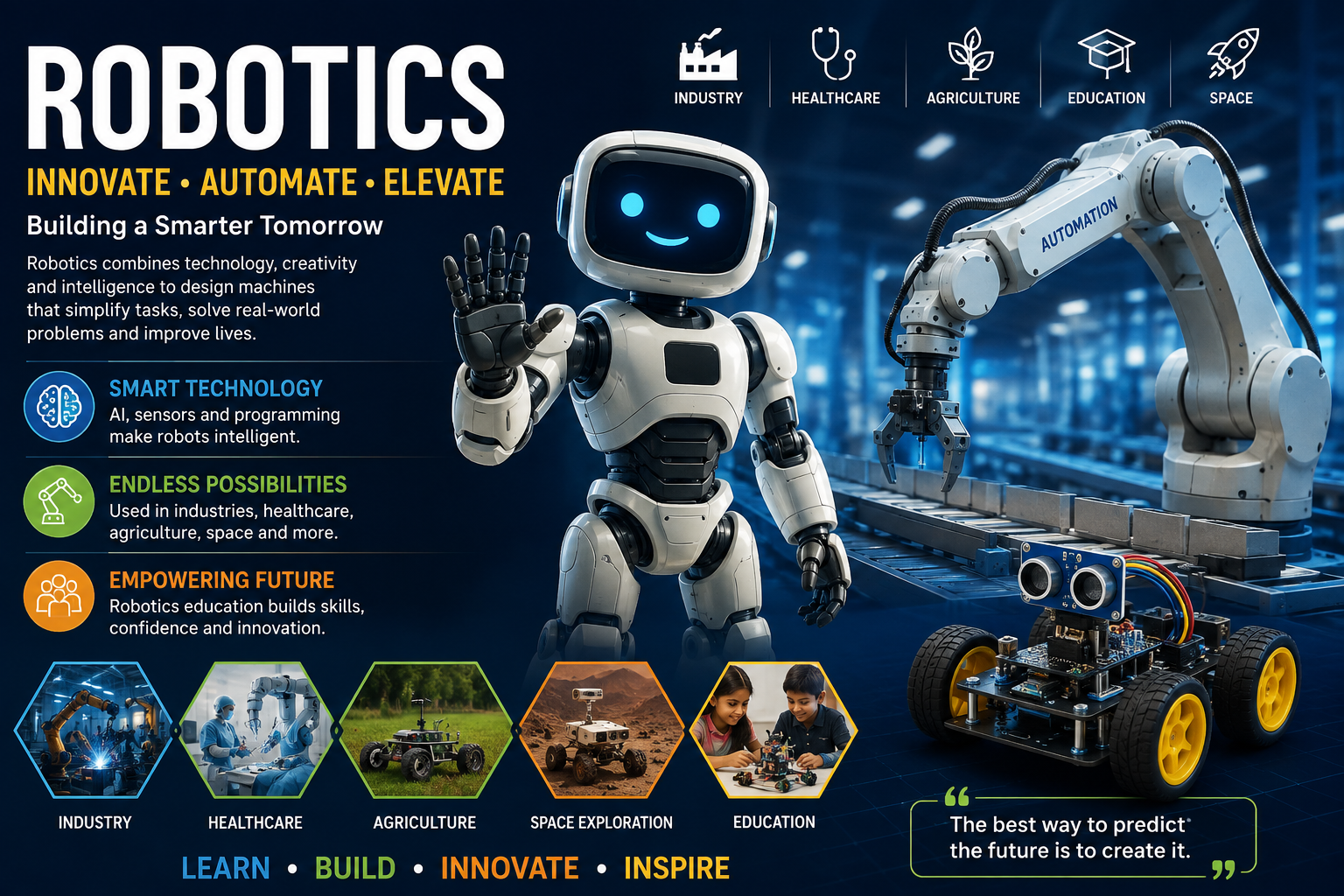
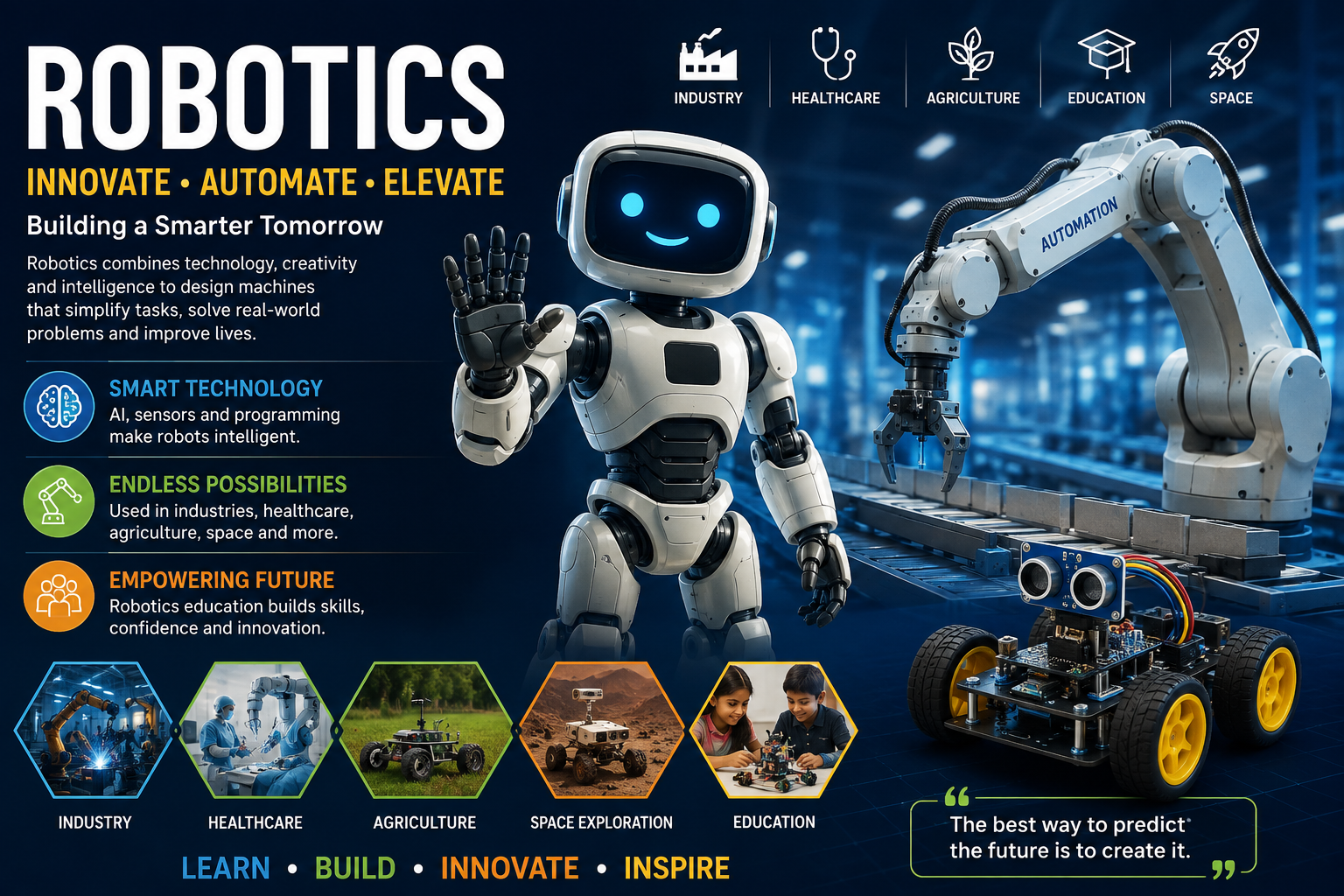
Robotics is no longer a technology limited to science-fiction movies or advanced research laboratories. Today, robots are being used in schools, hospitals, factories, warehouses, agriculture, defence, space exploration, and even homes. As technology continues to advance, robotics is becoming one of the most important fields shaping our future.
What Is Robotics?
Robotics is the field of technology that combines mechanical engineering, electronics, computer programming, sensors, artificial intelligence (AI), and automation to design and build machines that can perform tasks.
A robot can be programmed to perform simple actions, such as moving from one place to another, or complex tasks such as identifying objects, making decisions, assisting doctors, or working alongside humans in factories.
Why Is Robotics Growing So Quickly?
Several technological developments are driving the rapid growth of robotics.
1. Artificial Intelligence
AI is making robots smarter. Modern robots can analyse information, recognise objects, understand their surroundings, learn from data, and make decisions with limited human intervention.
2. Automation
Industries are increasingly using robots to automate repetitive, dangerous, and highly precise tasks. This improves productivity, reduces errors, and allows humans to focus on more creative and complex work.
3. Advanced Sensors
Sensors allow robots to understand their environment. Cameras, ultrasonic sensors, LiDAR, temperature sensors, force sensors, and other technologies help robots detect objects and respond to changes around them.
4. Affordable Technology
Microcontrollers, sensors, motors, development boards, and software platforms have become more accessible and affordable. This has made it possible for students, schools, startups, and small businesses to experiment with robotics.
Robotics in Education
One of the most exciting applications of robotics is education.
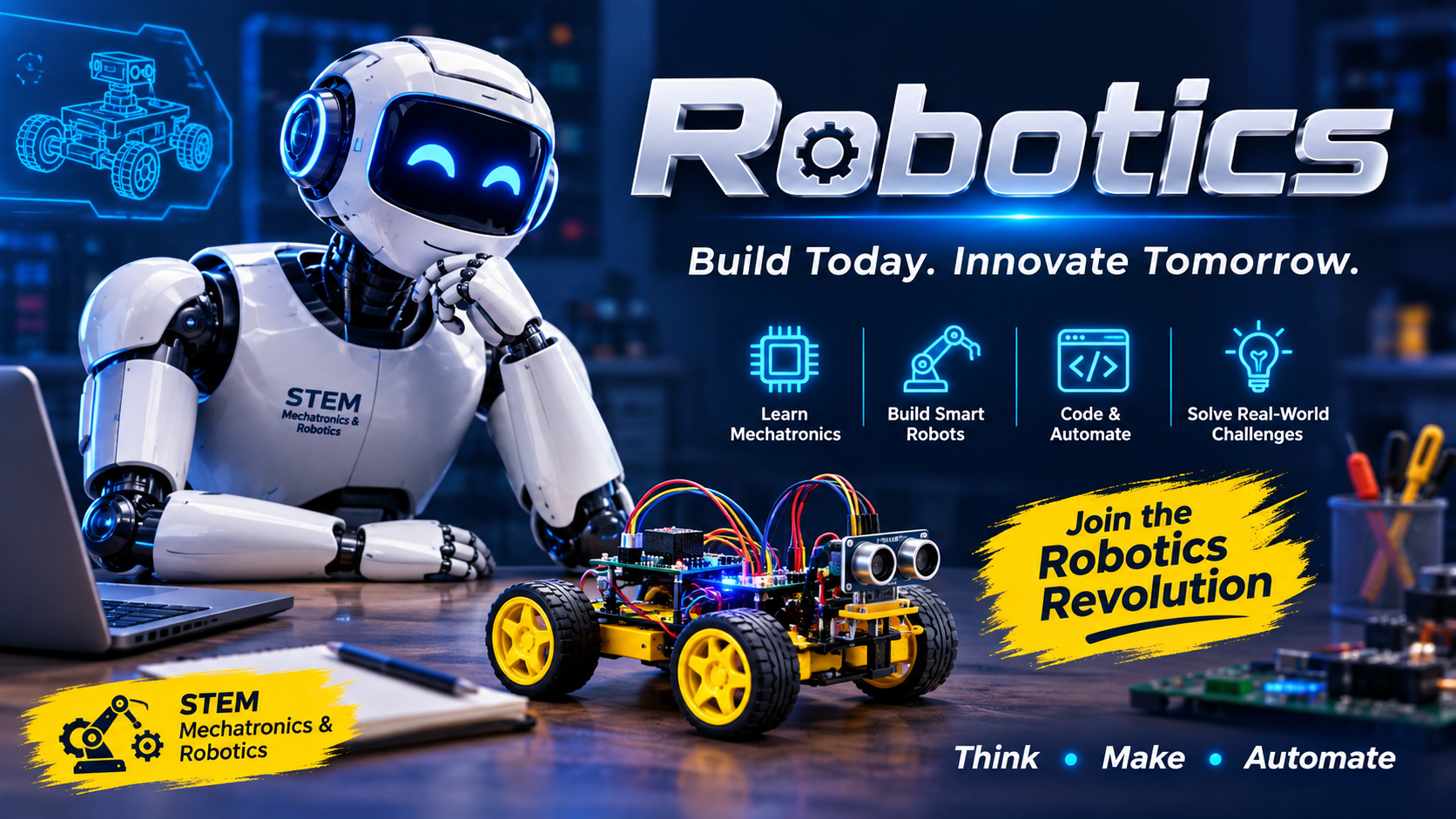
Robotics provides students with a practical way to learn Science, Technology, Engineering, Mathematics, programming, electronics, and problem-solving.
Instead of only learning concepts from textbooks, students can build and program real projects. They can create obstacle-avoiding robots, smart vehicles, robotic arms, automatic systems, and AI-based projects.
Robotics education also develops important 21st-century skills such as:
Problem-solving
Logical thinking
Creativity
Collaboration
Programming
Design thinking
Innovation
Critical thinking
This makes robotics an important part of modern STEM education.
Robotics in Industry
Manufacturing is one of the largest users of robotics. Industrial robots are used for welding, painting, assembly, packaging, inspection, material handling, and quality control.
Robots can work continuously with high accuracy and consistency. Collaborative robots, commonly called cobots, are also designed to work alongside human workers.
The future of manufacturing is likely to involve greater cooperation between humans, robots, AI systems, and automated machines.
Robotics in Healthcare
Robotics is also transforming healthcare. Robotic systems can assist surgeons, support rehabilitation, automate laboratory processes, and help hospitals transport medicines and supplies.
Medical robotics is particularly valuable because it can provide high precision and assist professionals in performing complex procedures.
Robotics in Agriculture
Agriculture is another major area of opportunity. Robots can help with:
Crop monitoring
Automated irrigation
Seed planting
Weed detection
Harvesting
Spraying
Soil analysis
Combining robotics with AI, drones, computer vision, and IoT can make agriculture more efficient and data-driven.
Humanoid Robots: The Next Big Step
Humanoid robots are attracting significant attention because they are designed to operate in environments built for humans.
Future humanoid robots could potentially assist in factories, warehouses, healthcare, education, customer service, and domestic environments.
The combination of humanoid hardware + AI + computer vision + advanced sensors could create machines capable of understanding and interacting with people in increasingly natural ways.
The Future of Robotics
The future of robotics will not simply be about replacing humans. It will increasingly be about humans and robots working together.
Robots are particularly useful for dangerous, repetitive, physically demanding, or highly precise tasks. Humans remain essential for creativity, empathy, leadership, communication, judgment, and strategic decision-making.
The most successful future workplaces will likely combine the strengths of both.
Why Students Should Learn Robotics Today
The jobs of tomorrow will require more than traditional academic knowledge. Students will need to understand technology and know how to use it to solve real-world problems.
Learning robotics at an early age can help students move from being technology consumers to technology creators.
A student who learns how sensors work, writes a simple program, builds a robot, and solves a real problem is developing skills that can be valuable across engineering, AI, automation, electronics, software, and entrepreneurship.
Conclusion
Robotics is changing the way we learn, work, manufacture products, provide healthcare, grow food, and explore the world. With the rapid development of AI, sensors, computing, and automation, robotics will become an even more important part of everyday life.
For schools, businesses, governments, and young learners, investing in robotics is not simply about learning a new technology. It is about preparing for the future.
The next generation will not just live alongside robots—they will design, program, control, and innovate with them.